9Router Cost Tracking: Combos and Fallbacks
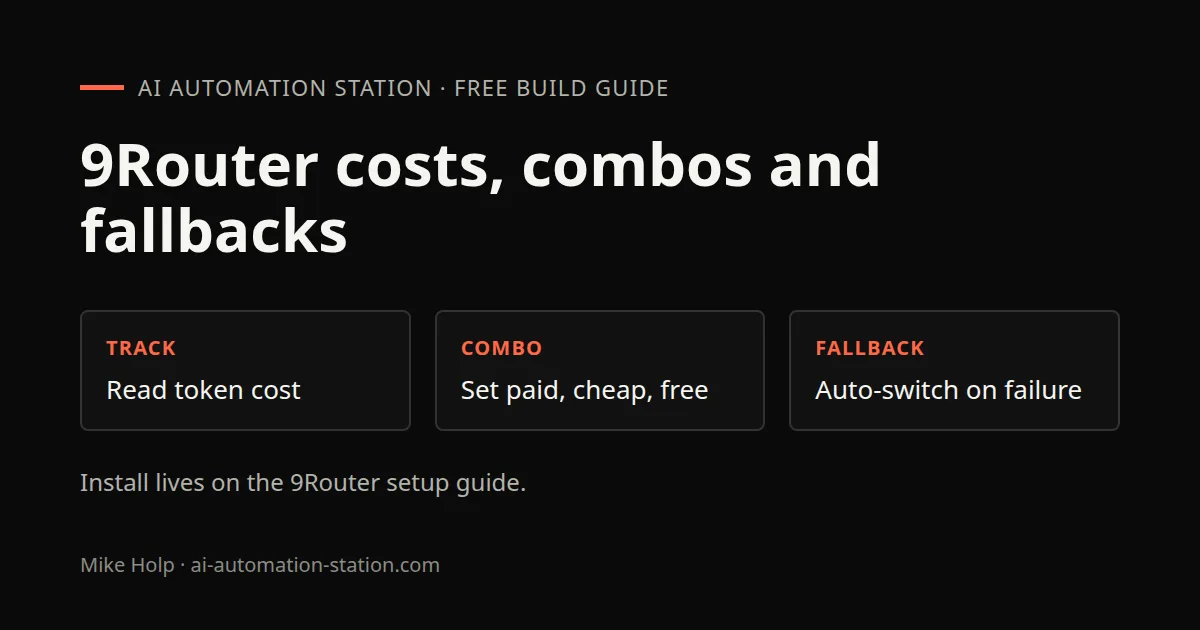
Quick answer: On 9 July 2026, 9Router ran as a local proxy so OpenCode token use and estimated cost stayed visible, with model combos, auto-fallback from subscription to cheap to free, and weekly quota on the same dashboard. Install is on the 9Router setup guide.
This page stays on cost tracking, combos and fallbacks from that recording. It does not repeat install, the default port, or provider-account setup. For a local request check after a gateway is already running, see Test your first AI API request locally.
What this recording shows
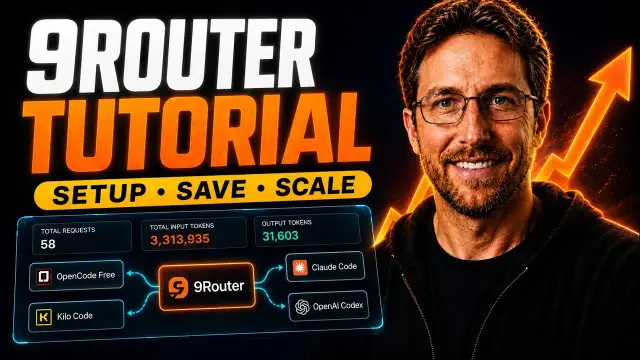
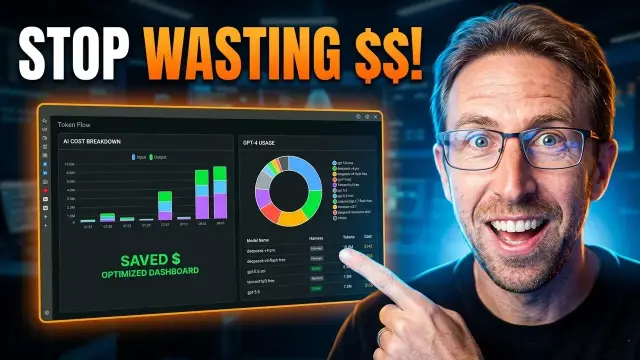
9Router is a local proxy for AI coding tools. In the 9 July 2026 recording the dashboard was already open. Requests from OpenCode went through that proxy, then the same window showed tokens, an estimated cost, combos, auto-fallback and weekly quota.
The recording named OpenCode Go, OpenAI Codex, Claude Code, Kilo Code, OpenCode Free and Mimo as tools that could sit behind the proxy. Most of the live tracking used OpenCode. Hermes Agent was named as something you can add. It was not integrated in this session.
1. Read cost from the local proxy
9Router ran as an app on the computer, down in the taskbar, and could be brought up at any time. Switching the OpenCode session to the 9Router model showed the proxy connected to OpenCode Go. That is the tracking setup used on camera, not an install walkthrough.
On 9 July 2026 the dashboard showed about 52 million input tokens on OpenCode models such as DeepSeek V4 Pro, with a total estimated cost of $1.42. The recording said that figure was estimated and not actual spend. In OpenCode, the day before on DeepSeek V4 Pro showed $6.87. That was compared with Fable 5 at $10 per million input tokens on that date, as a scale check, not as a live price list.
Later in the same recording, that day’s OpenCode use was about 5 million tokens at about 28 cents. A cheaper model or a free model was named as a way to push token spend toward zero. Those numbers are from 9 July 2026. Check your own dashboard and provider bills.
2. Provider risk notices
Claude Code showed as connected, with a risk notice on screen: the provider uses a subscription OAuth session, not officially licensed for proxy router use, and the account may be restricted or banned. The recording treated that as use at your own risk.
Claude Code was left unused through 9Router so the account would not be suspended. The same caution was applied to the Codex app. Tracking stayed on free options such as OpenCode Go. Kilo Code was opened as another free-model source, then skipped because the command-line side was not configured. Kilo Code install itself is on the Kilo Code tutorial.
3. Why OpenCode for cost tracking
The recording said 9Router was not being used to its maximum, which is falling back when one coding harness runs out of credits. It was used with OpenCode so token counts and spend stayed easy to watch. OpenCode was already configured. The Linux terminal was the usual place for that work.
Codex lifetime usage on camera was 5.8 billion tokens, with a peak of 326 million. The recording could not see a today figure there and treated Codex as more expensive than the OpenCode path in this session. OpenCode Go plans and limits are on OpenCode Go.
4. Token savers named in the recording
The dashboard listed token savers built into 9Router. Headroom, Caveman and Ponytail were named. The recording did not explain how those tools work beyond turning them on and picking a mode.
- Headroom was described on screen as 60 to 95% fewer tokens for JSON data and 15 to 20% fewer tokens for coding agents. That is the product copy shown on 9 July 2026, not a measured result from this session.
- Caveman was named as a skill that saves on credits.
- Ponytail was named alongside it.
Modes shown were ultra savings, full and light. OpenCode was left on full because it was already cheap. Headroom was on. Opening its dashboard showed no savings yet from OpenCode. The recording expected larger gains if Claude Code or Codex were added later. For RTK as a separate saver, see RTK Token Savings: Install, Hooks and Checks.
5. Auto-fallback across subscription, cheap and free
Auto-fallback was described as switching between subscription, cheap and free with zero downtime, so you do not manually switch providers. The recording listed three bands:
- Subscription: Claude Code, Codex, GitHub Copilot. When that quota is exhausted, traffic drops to cheap models.
- Cheap: GLM 5.2, MiniMax M3. When that budget is limited, traffic drops to free models.
- Free: Kiro, OpenCode Free, Vertex.
The recording said there were over 60 AI coding models to choose from. It also said 9Router charged no subscription fee of its own. GitHub stars shown that day were about 30,000. Those are the figures from 9 July 2026.
6. Custom model combos and priority
Combos let you set the models for each tool and cycle through them by provider. The recording showed these lists, then said you can rearrange them so one model is the default and the others are fallback:
- Claude: Opus 4.7, 4.8 and Sonnet 5.
- Codex: 5.4 Mini as the main Codex pick, then 5.4 and 5.3 Codex.
- OpenCode: a set of models already filled in. The recording did not read every OpenCode name aloud.
Each session’s tokens were visible in the same dashboard while an AI search visibility tool was being built. When Fable 5 credits reset, the plan on camera was to switch to that more capable model. Until then, OpenCode stayed in use because spend was low. Choosing models for a task, separate from this proxy, is on choosing AI models for a task.
7. Weekly quota
Quota usage was on the same dashboard. On 9 July 2026:
- Codex for the week was about 52%, with two resets that month, and a reset in 5 days.
- The Codex session was pretty much maxed out.
- Claude was maxed out for the week, with a reset on 11 July 2026, which was the hoped-for window to use Fable 5.
Those quota readings are from that recording. Check the live meters on your own accounts. A local dashboard that sits beside 9Router is on Token Usage Dashboard: ccusage, RTK and Costs.
Watch the walkthrough

FAQ
Does the 9Router cost figure equal what you paid?
No. On 9 July 2026 the dashboard showed about 52 million input tokens at an estimated $1.42. The recording said that estimate was not actual spend. OpenCode showed $6.87 for DeepSeek V4 Pro the day before.
Why did this recording track cost through OpenCode?
The recording used 9Router mainly with OpenCode to watch tokens against spend. OpenCode was already configured, looked cheaper than the Codex lifetime usage on camera, and kept Claude Code and Codex off the proxy after the subscription OAuth risk notice.
What is auto-fallback in this recording?
After a subscription quota is exhausted, 9Router drops to cheap models, then to free models, with no manual provider switch. The recording named Claude Code, Codex and GitHub Copilot as subscription, GLM 5.2 and MiniMax M3 as cheap, and Kiro, OpenCode Free and Vertex as free.
Did Headroom show savings in this recording?
No. Headroom, Caveman and Ponytail were named as token savers you can turn on. The Headroom dashboard in this recording had not saved anything yet while using OpenCode.
Sources
- Video: 9Router Cost Tracking: Model Combos & Auto-Fallback (9 July 2026)
- 9Router site: https://9router.com/
- 9Router GitHub: https://github.com/decolua/9router
You may also like
Build the next one with AI Income Lab
Step-by-step courses, reusable templates, and a community that answers when you get stuck.
Members get the Claude Code & Skills and Codex Tutorials & Courses lessons.
- Courses for builds like this one
- Copy-ready templates
- Ask questions while you build
- Weekly coaching on VIP


