Trakkr and Codex: AI Visibility, Crawlers and Visits
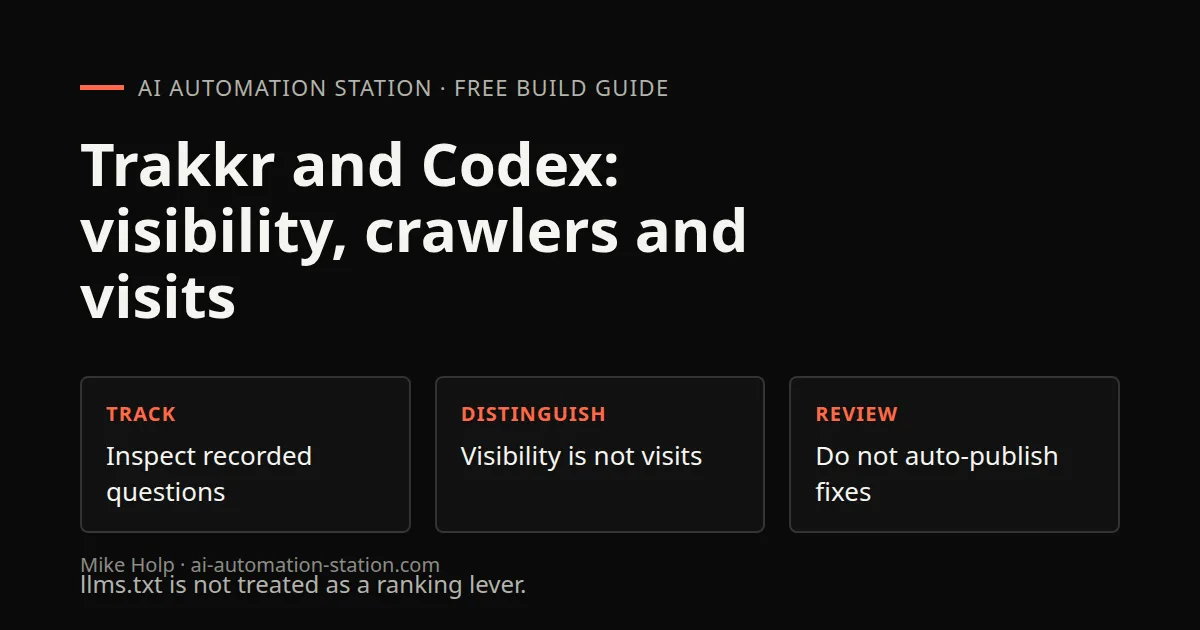
Quick answer: Inspect tracked questions and MCP action lists, then keep AI visibility, crawler activity, citations and visits as separate events. An assistant naming a brand is not a click. Do not auto-publish the suggested fixes.
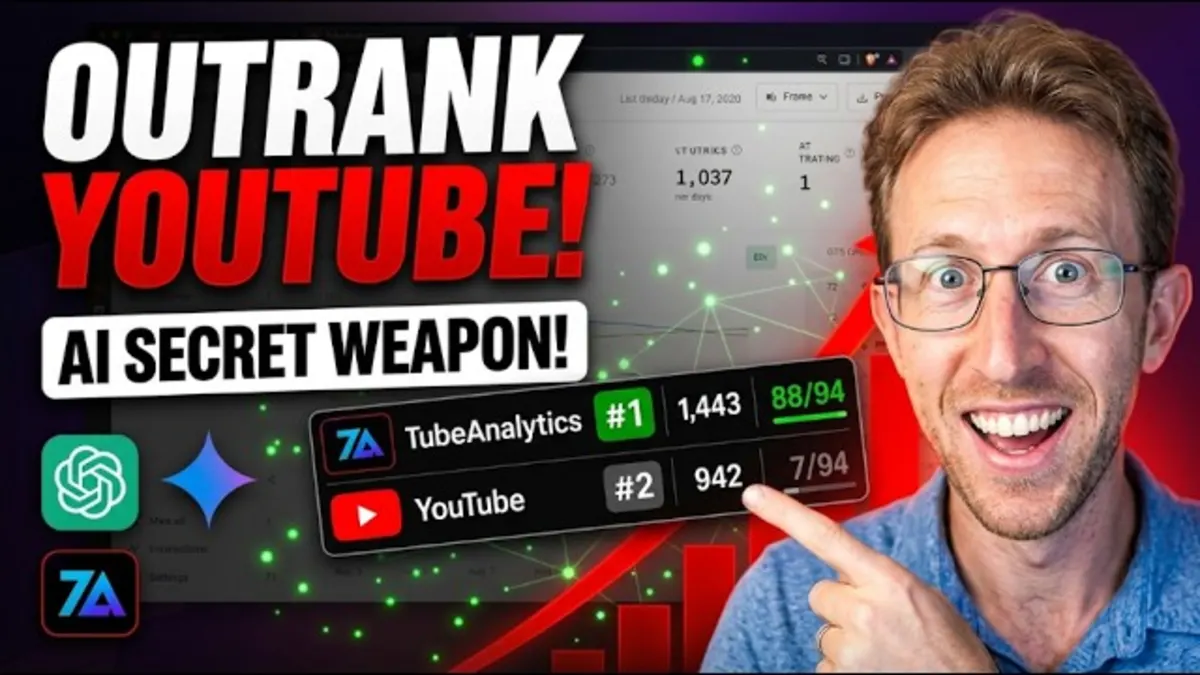
The AAS Trakkr recording moves between a visibility dashboard, crawler activity, tracked questions and an MCP-connected coding agent. Mike asks Codex to retrieve actions and ideas, then to implement selected changes.
The strongest lesson is not a universal ranking blueprint. It is the need to keep different measurements separate. An assistant naming a brand, a crawler fetching a page and a person visiting the website are three different events.
Understand the sample behind a visibility score
Mike inspects competitor visibility and tests an individual question in a chat interface. Some views show a leading position, while broader dashboard views show other competitors ahead. Those observations can coexist because they measure different questions and aggregates.
Keep the actual prompt set, model, date and answer evidence. One favorable answer is not proof that a site outranks every competitor across AI search.
The current Trakkr site describes visibility as prominence across the prompts and models being tracked. That is narrower and more useful than treating the score as a universal search-engine rank.
Inspect crawler activity without calling it traffic
The recording opens crawler and page-level views, then discusses citation-readiness scores. These can help identify pages to investigate. They do not establish that a model recommended the page, a human clicked it or a customer bought anything.
Mike also shows actual referral traffic and says AI sources represent a relatively small share compared with Google in his recorded example. The article does not reuse those historical numbers as a current analytics baseline for any property.
Use MCP to retrieve evidence and a bounded action list
The MCP is already connected in the recorded session. Mike asks Codex to pull the latest crawler findings, action items and ideas. The agent produces a prioritized list, then he requests implementation.
The transcript does not supply the complete MCP setup command. Use the provider’s supported instructions for a fresh installation. For a first run, ask for a report with the underlying page, observed condition, source date and proposed change. Review that before allowing edits.
Treat readiness recommendations as hypotheses
The recording discusses page formatting, answer blocks, author information, links, sitemaps, robots rules and llms.txt. Some are ordinary content or crawlability concerns. The source does not establish that any one file or format is the decisive ranking factor for every AI system.
In particular, do not turn the recorded claim about llms.txt into a verified ranking requirement. A tool score passing its own checklist does not establish a causal increase in citations, visits or sales.
Verify the change, then measure a consistent question set
A request to implement an action is not evidence that the right change persisted or caused an outcome. Inspect the affected artifact, check that the intended information is available and rerun the same eligible question set using a consistent collection method.
That is an editorial measurement recommendation, not a new site audit or a monitoring routine created here. No other product property was inspected as part of this article work.
Watch the walkthrough
FAQ
Does more crawler activity mean more sales?
No. Keep crawl access, citations, referrals and conversions as separate measurements.
Did the recording establish that all competitors were beaten?
No. Its individual examples and aggregate dashboard views have different scopes.
What should be done next?
A bounded review of the report’s evidence and proposed changes, not automatic publication or outreach. For a different provider’s dashboard-to-MCP workflow, see the published OpenSEO guide.
You may also like


Build the next one with AI Income Lab
Step-by-step courses, reusable templates, and a community that answers when you get stuck.
Members get the Claude Code & Skills and Codex Tutorials & Courses lessons.
- Courses for builds like this one
- Copy-ready templates
- Ask questions while you build
- Weekly coaching on VIP


